Restaurants in Punta Cana: What Dining Looks Like From Our Front Door
Ask what the restaurants are like in Punta Cana and the honest answer depends on where you sleep. From our residences at Puerto Marina, inside the gated community of Cap Cana, the marina village and its quayside tables are about a 3-minute drive, Juanillo Beach is 4, and every one of our 97 residences is delivered with a kitchen of its own. So this guide covers the whole dining week — eating out and cooking in — rather than handing you a list of names.
What kinds of restaurants will you actually find around Punta Cana?
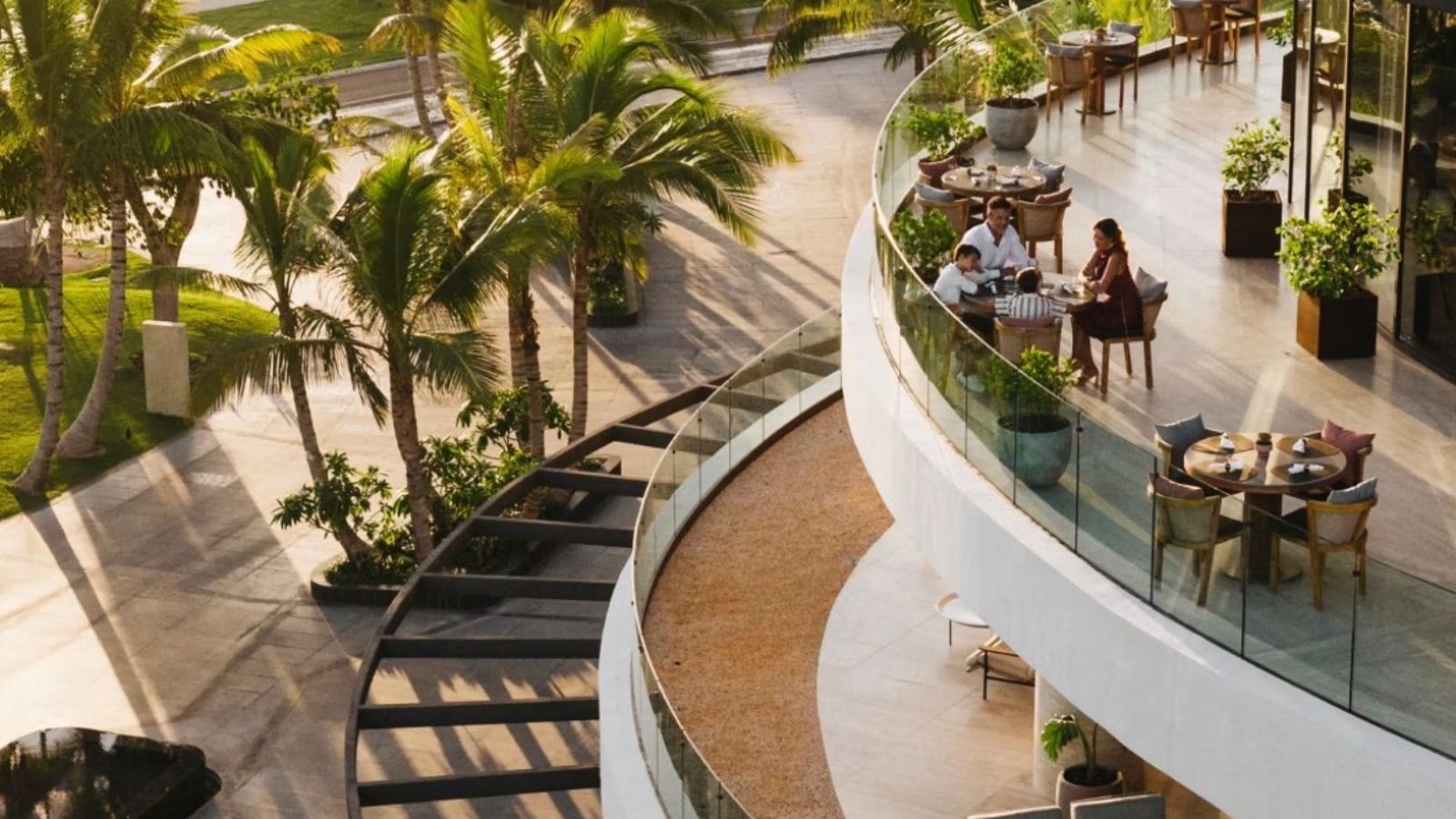
Punta Cana is a resort region rather than a single town, and its restaurants sort into a handful of clearly different formats. Inside the all-inclusive resorts along the coast there are buffets and reservation-only à la carte rooms, generally for guests or for visitors who buy a day pass. In the marina village beside us there is quayside dining — seafood, grills and international menus with boats moored a few steps from the tables. Along the beaches there are beach clubs, where lunch tends to drift into the afternoon and then into the sunset. Away from the resort strip there is Dominican comida criolla: family-run kitchens serving mofongo, sancocho, and the plate of stewed meat with rice and beans that everyone here calls la bandera.
We describe the scene by category rather than by naming favourites, and that is deliberate. Individual restaurants in a resort destination open, close, change chefs and change hands; a page that hands you a list of names is out of date before you land. What does not change is the shape of the choice — quayside, beach club, criollo, resort or casual local — and where each of those sits relative to our front door. That is what an owner actually plans a week around.
| What you are in the mood for | Where it tends to be | What the evening usually looks like |
|---|---|---|
| Quayside seafood and international menus | The marina village, a 3-minute drive from us | Boats in front of you and a dinner that runs long |
| A beach-club lunch that becomes sunset | Juanillo and the beaches along the coast, 4 minutes away | A lounger, a late plate, and staying for the light |
| Dominican comida criolla | Family-run kitchens in the towns beyond the resort strip | Mofongo, sancocho, stewed meat with rice and beans |
| Resort buffets and à la carte rooms | Inside the all-inclusive resorts along the coast | A day pass, or dinner as somebody's guest |
| Casual local spots and street food | Punta Cana village and Bávaro | Quick, informal, and the least expensive way to eat out |
How far is dinner from our front door?
The distances that shape an evening at Puerto Marina are short ones. The marina village and its quayside restaurants are about a 3-minute drive from our residences. Juanillo Beach, and the beach-club lunches along it, is 4 minutes. Scape Park is 8 minutes, and Punta Cana International Airport is 20 minutes — the number that matters most on the day guests land hungry. The building itself stands 660 ft from the sea, with our own beach on the lake at its base.
Those minutes change how you eat more than they look as though they should. When a table is 3 minutes away you decide at seven in the evening rather than at noon; you go out for one course and come back for coffee on your terrace; you take visitors to the water for lunch and are home before the heat of the afternoon. Set that against a stay built around a long drive in each direction and the rhythm of the whole week is different.
What does a dining week look like when the kitchen is yours?
Owners rarely eat out seven nights a week, and the reason is not the bill — it is that a resort dining week becomes exhausting if it never stops. The rhythm most people settle into is coffee and fruit on the terrace, a lunch improvised or skipped after a late plate at the beach, and dinner out two or three times. Each of our 97 residences is delivered with a full kitchen and its appliances installed, so cooking at home is a genuine choice rather than the fallback for the night nobody feels like dressing up.
That is the practical difference between a residence and a hotel room. In an all-inclusive the food is a fixed part of what you bought, and its convenience is also its ceiling. Here the evening is unbundled: buy fish in the morning, cook it at home, eat it on your own terrace at a table nobody had to reserve — then go out to the quay the following night because you want to, not because there is nowhere else. Delivery is scheduled for 2029, and the kitchens are specified with that kind of week in mind.
What should we expect on a restaurant bill here?
Two lines on a Dominican restaurant bill surprise first-time visitors, and both are worth knowing before your first dinner. A service charge of 10% — everybody calls it the propina legal — is added as its own line and is not discretionary. Beside it sits the 18% ITBIS, the Dominican value-added tax. The menu price is therefore not the figure at the foot of the bill, and on a long table the difference is big enough to notice.
The other half of that convention is that the 10% is widely reported not to reach the individual server reliably, which is why leaving something directly on top of it is customary. We pass this on as the documented local convention rather than as a rule we can cite chapter and verse, so treat it as a heads-up and confirm anything that turns on it once you are here. On prices we publish nothing: a quayside dinner and a plate of comida criolla in a family kitchen are not the same order of magnitude, and any figure we printed would be stale within a season.
Where do we shop when we would rather cook?
Provisioning here works in two tiers. For the daily things — bread, coffee, ice, wine, whatever got forgotten — there is a small market in the marina village, a 3-minute drive away, of the kind every marina has: short aisles, a deli counter, open late. For a proper weekly shop you drive out toward Punta Cana village and Bávaro, where the full-size supermarkets are, along with most of the imported brands that owners from abroad tend to look for.
Two things are worth knowing before the first shop. Imported brands generally cost more here than they do at home, while local produce, fish and rum cost noticeably less, so a list that leans local eats better for less. And the neighbourhood colmado — the Dominican corner shop — is a real institution: cold drinks, a few groceries, and often open when nothing else is. Most owners do one big shop on arrival day and top up from the marina market after that.
How much does dining access matter to a rental guest?
If the residence ever goes on the short-term market, dining is one of the first things a guest asks about — usually before the amenities and often before the beach. They are not asking for a list of restaurants. They are asking whether dinner is going to be an expedition. Sitting a 3-minute drive from the marina village and 4 minutes from Juanillo answers that in a single line, and it answers it for the two evenings that decide how a stay is remembered: the arrival night, when nobody wants to drive anywhere, and the last night, when everyone wants to sit somewhere they will talk about.
The kitchen does the other half of the work. Families travelling with small children, guests off an early flight, anyone with a dietary restriction — all of them want the option to eat in without it feeling like a compromise. We are not going to put a number on what that is worth to a booking, because nobody honestly can. What we will say is that a stay where eating out and eating in are both easy is the kind of stay guests describe well afterwards.
Common questions
- Do we have to leave Cap Cana to find a restaurant?
- No. The marina village is about a 3-minute drive from our residences and carries the everyday dining — quayside seafood, grills, casual terraces. Juanillo Beach and its beach-club lunches are 4 minutes. You would drive out toward Punta Cana village and Bávaro for family-run comida criolla or a wider casual choice, and that is still a short trip rather than an evening's undertaking.
- Is the tip already included on a Dominican restaurant bill?
- In practice, yes. A service charge of 10%, known as the propina legal, is added as its own line, and the 18% ITBIS appears beside it — so the menu price is not what you pay. It is widely reported that the 10% does not reliably reach the individual server, which is why leaving something directly is customary on top of it. Treat that as the documented local convention rather than a rule we can cite by statute, and confirm it locally.
- How well equipped is the kitchen in a Puerto Marina residence?
- Every one of our 97 residences is delivered with a full kitchen and its appliances installed, which is what makes cooking at home a real alternative to going out rather than a last resort. Residences are scheduled for delivery in 2029, so a buyer today is choosing the kitchen they will be cooking in, not inheriting somebody else's.
- What currency and payment do restaurants here expect?
- The Dominican peso is the currency. Cards are widely accepted around the marina and the resort areas, and it is worth carrying some pesos for smaller local places and colmados, which often prefer cash. We deliberately do not publish price ranges: a quayside dinner and a lunch in a family kitchen sit in completely different brackets, and printed figures age badly.
Want the details for your own situation?
Ask about availability, layouts or the buying process, and someone from the sales team will get back to you.
Get in touch