Living in Punta Cana Month by Month, From a Home at Marina Cap Cana
Most answers about living in Punta Cana describe one perfect day. A resident lives all the others too, and the place changes more across the calendar than across the week: the crowds, the rain, the heat, even the time difference with home. This guide follows that year from Puerto Marina, a development of 97 residences in the Marina Cap Cana district of Cap Cana, 660 ft from the sea, with a private beach on Blue Lake. The residences are due for delivery in 2029, so what follows is how the setting is planned to work, set against the long-term climate records and published arrival counts that any resident lives with.
A calendar, not a postcard
Most pictures of living in Punta Cana are taken on the same kind of day: dry, bright, a light breeze off the sea. Residents get plenty of those days, but they also get the rest of the calendar, and the calendar is what separates a place you visit from a place you live. Two stretches shape the year. From late December to the end of April the weather is at its driest and the region at its busiest. From June to November the heat builds, the rain gets heavier and the Atlantic hurricane season runs its course.
Neither half is a reason to stay away. Each simply asks different things of a home: somewhere to swim when the public beaches are full, something to do on a wet afternoon, a building that has been designed with wind in mind, an internet line good enough to work on. The sections below take the year in that order, then turn to what a residence at Puerto Marina is planned to offer in each part of it.
December to April: the driest months, and the busiest
Long-term climate records for the Punta Cana weather station put average daytime highs at about 82 °F through the winter months, with nights around 71 to 72 °F; February has the coolest nights of the year. The drier season lasts roughly four months, from about December 29 to April 30, and the sea stays warm, around 79 to 81 °F on average. These are averages over many years, not a forecast for any given week, but they describe the season most people imagine when they think of the Caribbean.
They also describe the season everyone else chooses. In 2025 December was the busiest month of the year for foreign arrivals at Punta Cana International Airport, with 536,574 passengers landing. A resident notices that close to home: the restaurants at Cap Cana Marina, 3 minutes away by car, fill up, and Juanillo Beach, 4 minutes away, is at its fullest. This is when a building with its own water earns its keep. Puerto Marina's residents have a private beach on Blue Lake, a beachfront infinity pool and a rooftop panoramic pool, so a crowded public beach becomes one option rather than the only one.
June to November: heat, heavy rain and the hurricane season
The second half of the year is warmer and wetter. In the same long-term records September is the hottest month, with average highs close to 88 °F, and October the wettest, with about 6.0 in of rain on average. A resident plans for wet afternoons in autumn the way a visitor plans for sunny ones in winter.
The Atlantic hurricane season runs from June 1 to November 30. No record can promise a quiet year, so living here means having a plan rather than hoping not to need one: supplies set aside, documents kept together, and an arrangement for who checks on the home when you are away. The Dominican building code made official in 2026 requires structures, their cladding and its anchorages to be designed for minimum wind loads; ask the developer how Puerto Marina's design addresses that requirement, and ask the building's management what its storm procedure will be. The same months are also the calmest: September 2025 brought the fewest foreign arrivals of the year to the airport, 278,783, and for many residents that quiet is the best part of autumn.
| Part of the year | What the long-term records show | What it asks of a home |
|---|---|---|
| About December 29 to April 30 | The drier season; highs near 82 °F, nights around 71 to 72 °F | Somewhere to swim away from the busiest beaches |
| September | The hottest month, highs close to 88 °F, and the quietest for arrivals | Shade, cool rooms and time to enjoy a calmer marina |
| October | The wettest month, about 6.0 in of rain on average | Things to do indoors on wet afternoons |
| June 1 to November 30 | The Atlantic hurricane season | A storm plan, and someone to check on the home if you travel |
The clock and the connection
Two practical details matter more to people who live here than to people on holiday, above all to anyone who keeps working for an employer or clients abroad. The first is the clock. The Dominican Republic stays on Atlantic Standard Time, four hours behind UTC, all year round and never changes it for daylight saving. So from March to November a resident keeps the same hours as New York or Toronto, and through the northern winter is one hour ahead of them. A call that sits comfortably in July moves by an hour in November, which is worth building into a routine.
The second is the internet. Inside Cap Cana, broadband comes from an operator that serves the community alone, and it says its fibre runs underground right into the home, bringing TV and phone service over the same line. The operator does not publish speeds for individual buildings, so confirm service at the exact address before planning a job around it. For context, Ookla's index for August 2026 put the national median fixed connection at 74 Mbps down and 42 Mbps up, a figure for the whole country rather than a promise for any line, and satellite internet has been available in the Dominican Republic since July 2022 as a backup.
What the building covers when the weather or the crowds do not cooperate
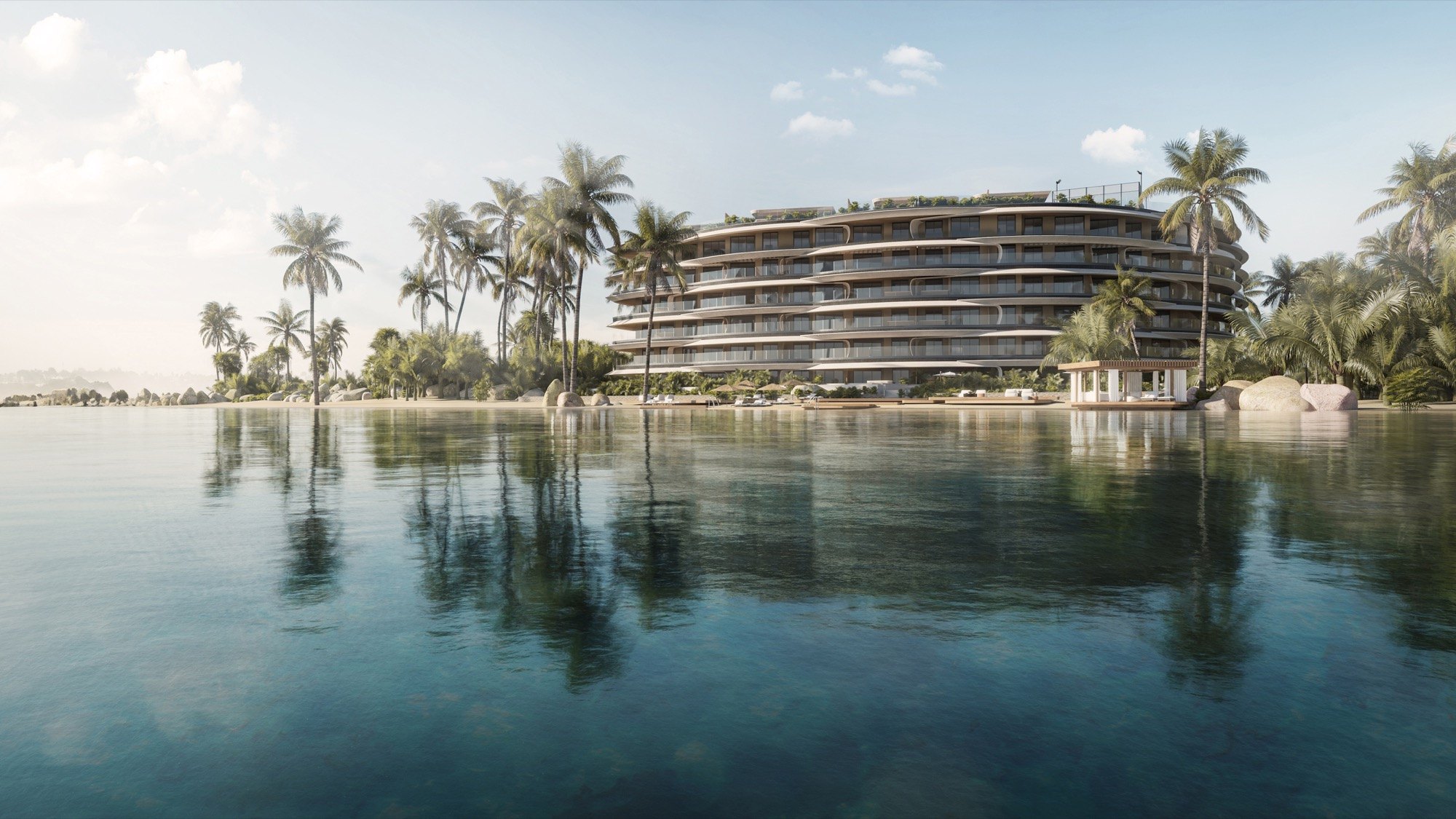
Puerto Marina is small by the standards of this coast: 97 residences, 660 ft from the sea, opening onto their own beach on Blue Lake. Its shared spaces are planned so that the less photogenic days of the year still have a shape. A wet October afternoon can go to the private cinema, the spa or the panoramic fitness center; a crowded Saturday in March to the lake beach or one of the three pools. The padel court and the kids club give a household a routine that does not depend on the season, and the development is gated, with security around the clock.
Beyond the gate, the everyday radius is short. These are the drive times from the development, measured on a clear road, with the moment of the year when each one matters most.
| Destination | Drive from Puerto Marina | When it matters most |
|---|---|---|
| Cap Cana Marina | 3 min | Dinners and errands, all year |
| Juanillo Beach | 4 min | Early mornings in the busy months, before the beach fills |
| Scape Park · Hoyo Azul | 8 min | Days out with visiting family and friends |
| Punta Cana International Airport | 20 min | Trips home, and the December and March peaks |
Choosing a residence to live in, not only to visit
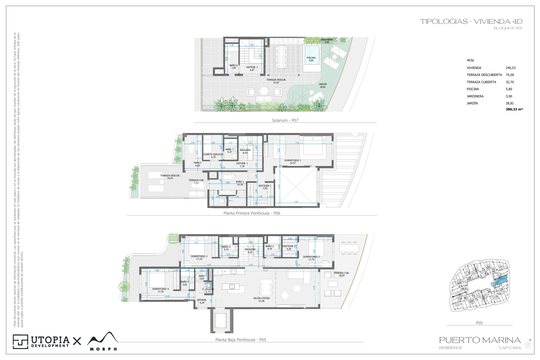
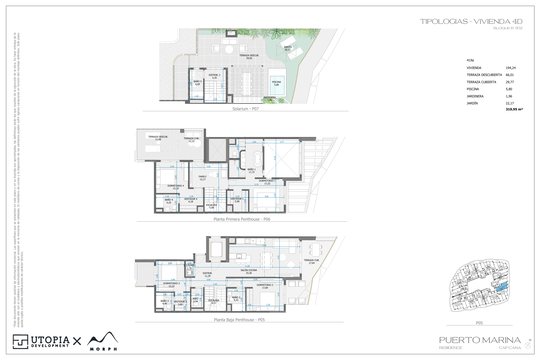
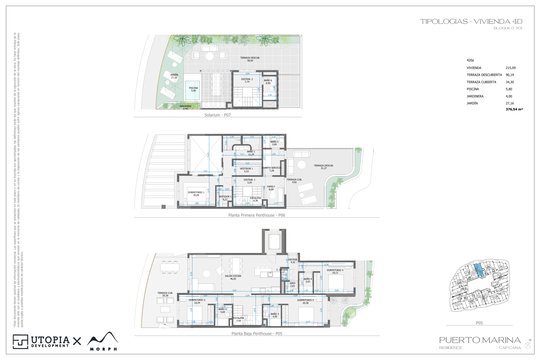
A home for all twelve months is judged differently from a holiday base. Space and outdoor room count for more, and so does a layout that lets a household spread out on the days it stays in. Puerto Marina's residences run from two-bedroom homes with garden or ocean views, through three-bedroom lake residences, to penthouses of four bedrooms on three levels, with prices from the mid $500,000s. The largest plans in the current catalogue are four-bedroom duplexes of 2,088 to 2,583 sq ft, each with a terrace, a garden and a private pool, which is closer to a house than to an apartment.
Delivery is planned for 2029, so choosing now means choosing from plans rather than from a finished home. Owning in the Dominican Republic does not require residency: a foreign national can hold property in their own name on the same terms as a Dominican. Living here for long periods is a separate question with its own paperwork, and a Dominican immigration attorney is the right person to map it for your circumstances.
Common questions
- Is Punta Cana pleasant to live in all year round?
- Yes, but it has two distinct seasons. The drier months run from about December 29 to April 30, with average highs near 82 °F; September is the hottest month and October the wettest, and the Atlantic hurricane season lasts from June 1 to November 30. Living here year round means planning for both halves, not only the postcard one.
- What time is it in Punta Cana compared with the US East Coast?
- The Dominican Republic keeps Atlantic Standard Time all year and does not use daylight saving time. From March to November its clocks match US Eastern time; during the northern winter it is one hour ahead.
- Can I work remotely from Puerto Marina?
- Cap Cana's own operator describes an underground fibre-to-the-home network, but it does not publish speeds by building, so confirm service at the address before you rely on it. Nationally, the median fixed connection measured 74 Mbps down in August 2026, and satellite internet is available as a backup.
- When will Puerto Marina be ready to live in?
- Delivery of Puerto Marina's 97 residences is planned for 2029. Until then the residences are sold from plans, with prices from the mid $500,000s.
Want the details for your own situation?
Ask about availability, layouts or the buying process, and someone from the sales team will get back to you.
Get in touch