Cost of Living in Punta Cana When You Live Here Part of the Year
Most owners at Marina Cap Cana will not live in Punta Cana twelve months a year. They arrive for a season, leave, and often rent out the weeks in between, so their cost of living is really two budgets: one for the months they are here and one for the months they are not. This guide builds both from Puerto Marina, a development of 97 residences 660 ft from the sea, due for delivery in 2029, using only figures a public source publishes. Where no reliable number exists, such as the building's condominium fee or a power tariff, it says so and tells you what to ask for.
Two budgets, not one
A holiday is the number most buyers start from. Banco Central figures, as reported by the Dominican press, put the average foreign visitor to the Dominican Republic in 2025 at 7.85 nights and about US$170.94 a day, with lodging, meals, transport and excursions all included. That is a national average across every kind of trip, not a Punta Cana price and not what any residence costs, but it shows the shape of the question: a visitor's spending stops when the trip ends.
An owner's does not. Once you hold the keys, part of your outlay runs every month whether you are on the terrace or back home, and part of it follows you only while you are here. Splitting the year into months in residence and months away is the most useful way to budget, because it separates the costs you can steer by changing your calendar from the ones you cannot.
This page takes the two halves in turn, then the weeks you might rent to guests, and ends with the two background forces that move every line: the peso and the number of days you spend in the country.
Your months in residence: the market, the marina and the restaurant bill
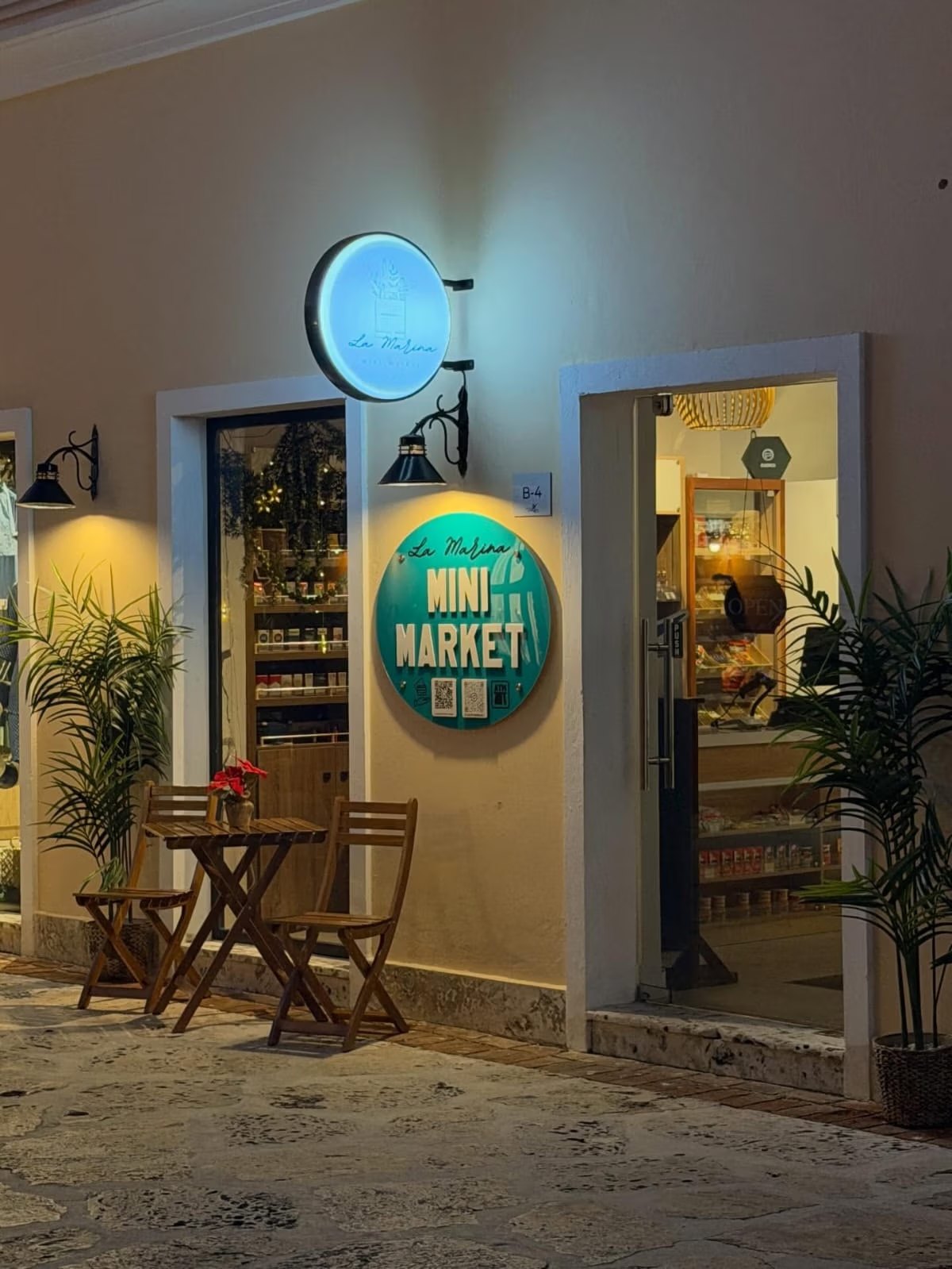
While you are in residence, food is the line you shape most. Cap Cana Marina, with its restaurants and shops, is a 3-minute drive from Puerto Marina and Juanillo Beach is 4 minutes away, so errands are short. What changes the total is less where you shop than what goes in the basket.
The Dominican sales tax, ITBIS, is levied at 18% on industrialised goods and on services. In a July 2025 answer the tax authority (DGII) restated that fruit sold in its natural state, imported or not, falls outside it. In practice fresh produce carries no ITBIS, while processed and packaged groceries generally do, and imported products have also passed through customs, where the duty depends on each item's tariff heading. A kitchen built around the market stall pays less tax than one stocked from the imported-goods aisle.
Eating out works differently. A restaurant adds two lines to the menu prices: 18% ITBIS and a 10% service charge called the propina legal, widely reported as mandatory. Because that charge is just as widely reported not to reach your server reliably, leaving something in hand is customary on top. When you weigh an evening at the marina against a night cooking at home, compare the restaurant total after both lines, never the menu price.
Your months away: the costs that keep running
Leave for a season and some costs fall to almost nothing: groceries, restaurants, fuel. Others carry on, and they are the ones to pin down before you buy, because documents fix them rather than habits.
The condominium fee pays for the building and its shared spaces, which at Puerto Marina include a private lake beach on Blue Lake, a beachfront infinity pool, a rooftop infinity pool, a fitness center and spa, a private cinema and a padel court. Puerto Marina has not published its fee, so this page states none: ask for the projected condominium budget and its billing period in writing. The same bylaws decide whether short-term renting is allowed, since national law permits it and leaves the binding rule to each condominium.
Power, water and connectivity keep a standing charge even in an empty home. Most residences have a plunge pool on the terrace and every one is delivered with its appliances installed, so ask who services the pool and checks the air conditioning in the months you are away, and on whose bill. Cap Cana has its own fibre telecommunications operator, which publishes no per-building speeds or prices; confirm service at the address.
Property tax weighs less here than it might. The Dominican IPI is 1% a year on the part of a property's value above an annually adjusted threshold. Puerto Marina is CONFOTUR-approved, and Law 158-01 provides a fifteen-year IPI exemption for qualifying projects, counted from completion of construction; its buyer exemptions reach first buyers from the developer only, and they are not automatic but must be filed and recorded on the title. How that applies to your residence and to you is a question for your attorney.
Last comes household help. If you employ someone directly to clean and air the residence, the minimum wage for domestic work was set at RD$13,000 a month from 1 May 2025, a full-time figure. Confirm the current amount, and what employing someone requires of you, with a local accountant.
| Cost line | Months in residence | Months away | What is published |
|---|---|---|---|
| Groceries and dining | Your largest variable line | Close to nothing | 18% ITBIS on processed goods and meals, none on fresh produce; 10% propina legal at restaurants |
| Condominium fee | Due | Due | Not yet published for Puerto Marina: ask for the budget in writing |
| Power, water, internet | Full use | Standing charges, plus air conditioning and pool care if left running | No tariff we can source |
| IPI property tax | 1% above an exempt threshold, unless the CONFOTUR exemption applies | The same | Law 158-01; confirm your case with your attorney |
| Household help, if employed directly | Wages | Wages, if you keep them on | RD$13,000 monthly minimum for domestic work from 1 May 2025 |
Renting the weeks you do not use: what the taxes take
Many part-time owners let the residence while they are away, either themselves or through the optional managed rental program Puerto Marina describes, which markets, books and services a residence for short-stay guests. Income changes the budget, and so do the taxes on it.
Short-term tourist accommodation is subject to 18% ITBIS, and it is the host who owes it, whatever the booking platform collects or displays. A lease to someone making the residence their permanent home is treated differently, because the tax code exempts housing let for permanent habitation; where a stay of a few months falls between the two is a question for your accountant. On top of that, an owner who is not a Dominican tax resident faces a 27% withholding on gross rental income, with no deductions, as a single and definitive payment. Rates change, so confirm them before you set prices. CONFOTUR's exemptions concern the transfer tax and the IPI, rental income is taxed under its own rules, and how the two meet in your case is a question for your attorney.
Inside Cap Cana, renting also has a procedure. Its published access rules say an owner who rents a unit sends the tenant's identity documents to customer service, which vets them before granting resident access. Confirm with Cap Cana and with the building's management which route applies to short-stay guests.
The calendar matters as much as the tax, and it is worth choosing your own weeks with it in mind. The Banco Central's 2025 hotel-occupancy series for the Punta Cana and Bávaro zone shows how demand in the area rises and falls through the year. It measures hotel rooms, not condominiums, and says nothing about the bookings of any residence, but it marks the months when the area is full and the months when it is quiet.
| Month (2025) | Hotel occupancy, Punta Cana / Bávaro | Reading for your own calendar |
|---|---|---|
| January | 89.9% | High season: the area is full |
| February | 92.2% | The peak of the 2025 series |
| March | 87.5% | Still high season |
| September | 62.2% | The low point of the 2025 series |
| October | 70.0% | Quiet, and still within the hurricane season |
| Year average | 81.6% | Hotel rooms only, never a forecast for a residence |
Pesos, prices and the 182-day line
Puerto Marina's residences are priced in US dollars, from the mid $500,000s, but almost everything you spend once you live here is in pesos. A budget kept in dollars therefore moves with the exchange rate even when prices stand still. Across 2025 the dollar bought on average about RD$61.52, according to the Banco Central, an annual average rather than a rate anyone traded at on a given day, and the World Bank puts average consumer-price inflation for the same year at 3.9%. Both figures will be several years old by the time residences are delivered in 2029, so budget in pesos, convert last, and redo the sums every year.
The length of your stay matters beyond the bills. Dominican tax residence generally turns on spending more than 182 days in the country in a fiscal year, and it is a separate question from holding a residence card: immigration residency does not by itself make you a tax resident. Because crossing that line can change how your rental and other income are taxed, an owner whose stays are creeping towards half the year should plan the calendar with an accountant rather than discover the answer afterwards.
Common questions
- How much does it cost per month to live in Punta Cana part of the year?
- There is no honest single figure, because the two halves of the year behave differently. In the months you are here, food and dining dominate, and their tax lines are known: no ITBIS on fresh produce, 18% on most processed goods, and 18% plus a 10% propina legal at restaurants. In the months you are away, the condominium fee, standing utility charges and any household help keep running. Ask Puerto Marina for its condominium budget before you plan.
- Do I charge ITBIS if I rent my residence out for a month?
- Short-stay tourist accommodation carries 18% ITBIS, owed by the host rather than the booking platform, while housing let as someone's permanent home is exempt. A stay of a month or a few months can sit between the two, so have your accountant classify your lets before you take bookings.
- Is it cheaper to cook at home than to eat out at the marina?
- Usually, and partly for tax reasons: fresh produce in its natural state carries no ITBIS, while a restaurant bill adds 18% ITBIS and a 10% propina legal. Cap Cana Marina is a 3-minute drive from Puerto Marina, so the choice comes down to cost and mood rather than distance.
- What does it cost to employ a housekeeper in the Dominican Republic?
- The minimum monthly wage for domestic work was set at RD$13,000 from 1 May 2025, a full-time figure. It is reviewed from time to time and employing someone brings other obligations, so confirm the current amount with a local accountant before you agree terms.
- Will spending winters at Puerto Marina make me a Dominican tax resident?
- Tax residence generally turns on spending more than 182 days in the country in a fiscal year, not on owning property or holding a residence card. A winter season on its own may stay below that line, but count your days and speak to an accountant if your stays grow longer.
Want the details for your own situation?
Ask about availability, layouts or the buying process, and someone from the sales team will get back to you.
Get in touch