Sargassum in Punta Cana: what the seaweed season means for a home at Puerto Marina
Sargassum is the brown seaweed that some months turns a white Caribbean beach into a band of rust-coloured weed and an eggy smell. It is the question every buyer on this coast eventually asks, and the honest answer is a pattern rather than a promise. This guide sets out what the seaweed is, when it has tended to arrive, what the last two years were like, what is said about Juanillo, and how Puerto Marina, 660 ft from the sea with a private beach on Blue Lake, fits a season when the ocean shore is not at its best.
What is sargassum, and is it dangerous?
Sargassum is a seaweed that grows offshore in the Atlantic and drifts on the surface in rafts, sometimes very large ones. At sea it is a habitat for fish, crabs and young turtles. The trouble starts when currents and wind push it ashore. Piled on the sand it begins to decompose, and decomposing sargassum gives off hydrogen sulfide, the gas behind its rotten-egg smell.
The Florida Department of Health, which deals with the same seaweed on its own beaches, describes the gas as an irritant of the eyes, nose and throat, and says people with asthma or other breathing conditions may feel it more. The weed itself does not sting, but the tiny organisms living in it can irritate skin. Its advice is plain: do not handle or swim in the seaweed, wear gloves if you have to move it, keep an eye on children, and never cook with it, because it can carry heavy metals. In open air on a beach, the same authority does not expect the general public to suffer lasting harm.
When does sargassum reach Punta Cana?
There is no official calendar for this coast. The most useful long record we found is a long-running Punta Cana travel guide that has tallied the seaweed year by year. It finds no fixed start date: the season has begun as early as January in some years and only in April or May in others. Across its record, June to August carry the heaviest seaweed, with arrivals in 13 and 14 of the last 15 years, while October to December are the lightest, with seaweed in only 4 to 5 of the last 14 years in those months.
Treat that as the shape of the year, not a forecast. A light month in the tally can still bring a heavy week, and the reverse. For an owner who rents, the practical reading is that the summer months are the ones to describe honestly in a listing and the late-autumn months the ones where seaweed has historically been least likely.
What did 2025 and 2026 bring?
Both years were heavy. The same travel guide calls 2025 exceptional, with large quantities from the end of May that did not ease significantly until August. In July 2026 a Dominican business magazine, citing the University of South Florida's ocean-optics laboratory, reported roughly 10 million US tons of sargassum across the region between January and the end of June 2026, more than the 9.1 million or so of the same months of 2025 and far above the 1.3 million of the first half of 2024. It named Punta Cana and Bávaro among the places with some of the largest accumulations that season.
The same report noted who does the clearing: beachfront hotels stepped up their cleaning, while public-access stretches kept their seaweed longer for lack of resources to remove it. That pattern is worth remembering when you read a beach's reputation. A resort beach raked every morning and a public beach a mile away can look very different on the same day.
Does sargassum reach Juanillo Beach?
Accounts disagree, and both are worth hearing. The long-running travel guide says that when sargassum reaches this coast Juanillo is usually among the beaches heavily affected, with seaweed piling on the sand even while the water itself tends to stay clear. A Punta Cana hotel's travel blog, updated in September 2026, says the opposite: that an offshore reef shelters Cap Cana's beaches, Juanillo in particular, and catches the seaweed before it lands. Neither is a measurement, and both writers have an interest in the answer.
For Puerto Marina the beach is close: about 0.95 miles by road on open map data, the four-minute drive the development publishes. The sensible approach is to treat Juanillo like any Caribbean beach in a seaweed year. Look before you go, and keep a plan B.
How does Puerto Marina fit a seaweed week?
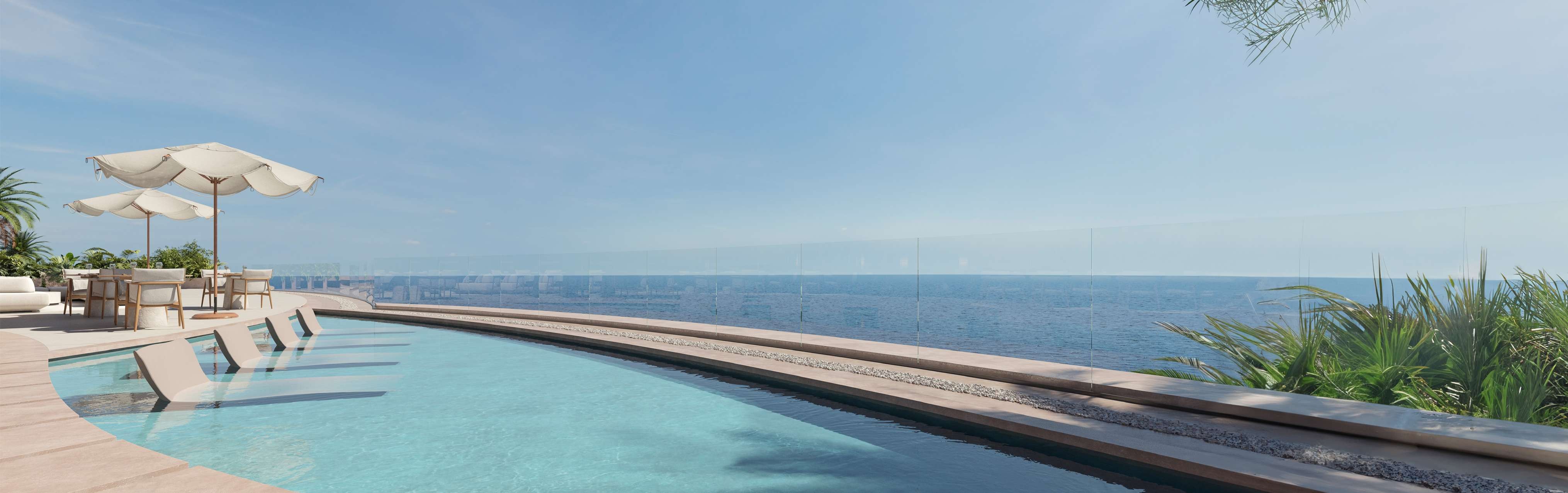
Its own water is not the open shore. The development publishes a private beach on Blue Lake, a beachfront infinity pool and a rooftop panoramic infinity pool, three places to swim for its 97 residences. A lake beach does not face the Caribbean swell that carries the seaweed rafts in, so a week when the sea beach is weedy does not have to be a week without a swim. What has not been published is how the lake is maintained, so ask the developer that directly rather than assume it.
For an owner who rents, the same point is a selling line if it is stated carefully. Describe the lake beach and the pools as they are, describe the season honestly, and do not promise a guest a seaweed-free sea in any month. A guest who was told the truth about July is a better review than one who was told nothing.
What should a buyer or renter ask about sargassum?
- Which months you will use the home. Owners who come in the late-autumn months have historically met the least seaweed; summer is the season to plan around.
- Who clears the nearest beach. A resort-maintained beach and a public one can differ on the same morning.
- How Blue Lake is kept. Ask the developer how the lake is maintained and what its water quality programme will be.
- Air and windows. If anyone in the household has asthma, the smell of rotting seaweed is the part to take seriously; a closed window and the rooftop pool are an easy alternative.
- What a listing says. Write the season into the rental description rather than leaving a guest to discover it.
Common questions
- What month is sargassum worst in Punta Cana?
- There is no official calendar. One long-running Punta Cana guide finds June to August the heaviest months in its record and October to December the lightest, with no fixed start date.
- Is sargassum harmful to swimmers?
- The seaweed does not sting, but tiny organisms in it can irritate skin, and rotting piles release hydrogen sulfide, which can irritate eyes, nose and throat. Health authorities advise not swimming in it or handling it bare-handed.
- Was 2026 a bad sargassum year?
- Yes. A Dominican business magazine citing the University of South Florida reported roughly 10 million US tons in the region in the first half of 2026, more than the same months of 2025.
- Where can you swim at Puerto Marina on a seaweed day?
- The development publishes a private beach on Blue Lake, a beachfront infinity pool and a rooftop infinity pool. Ask the developer how the lake will be maintained.
Want the details for your own situation?
Ask about availability, layouts or the buying process, and someone from the sales team will get back to you.
Get in touch